










Tutorials
Tutorial #1: The Rise of Intelligent Orchestration: How RL is Shaping the Cloud Continuum
Duration: 180 Minutes
Abstract: The orchestration of resources and services across the cloud continuum from the edge up to the cloud poses complex challenges due to its dynamic, distributed, and heterogeneous nature. In response, researchers have proposed a range of optimization methodologies, prominently including Reinforcement Learning (RL) and metaheuristic algorithms. However, a systematic comparison of these various approaches under a unified orchestration context remains largely unexplored. This tutorial presents a comprehensive study of RL and metaheuristic approaches for representative orchestration tasks such as resource allocation and scheduling in the Cloud Continuum. During the tutorial, the speakers will present single and multi-objective methodologies capable of addressing competitive requirements such as deployment costs, latency, and reliability in a complex ecosystem of heterogeneous and distributed cloud infrastructures. Instead of proposing only linearization techniques to balance the different objectives with different weights, the tutorial will focus on methodologies that can visualize the trade-offs among the multiple objectives, i.e., the Pareto Front (PF) of possible solutions for the deployment actions. Such techniques are timely and interesting for the network and service management research community, for both academia and industry partners. The discussed approaches can be applied to various network and service management problems currently being tackled by the ICIN community.

José Santos
(UGent - imec, Belgium)
Bio: José Santos obtained his M.Sc. degree in Electrical and Computers Engineering in July 2015 from the University of Porto, Portugal. Recently, he completed his doctoral studies at Ghent University in April 2022. He is currently a Postdoctoral Researcher in the IDLab Research Group at Ghent University – imec, Belgium. His research interests include Cloud Computing, the Internet of Things (IoT), Container Scheduling and Auto-scaling, Service Function Chaining, and Reinforcement Learning. He has authored over 40 scientific publications and received several awards, including the imec Ph.D. Excellence Award (2022), the Best Dissertation Award at NOMS 2023, and the FWO IBM Innovation Award (2023) for his doctoral research.

Mattia Zaccarini
(Università degli Studi di Ferrara, Italy)
Bio: Mattia Zaccarini received his M.Sc. Degree in Computer and Automation Engineering from the University of Ferrara, Italy, in 2022. In the same year, he joined the interdepartmental Distributed System Research Group, led by Prof. Cesare Stefanelli. He is currently a Ph.D. Student in the University of Ferrara, where is also part of the Big Data and Compute Continuum Research Lab, led by Prof. Mauro Tortonesi. His main research interests include Compute Continuum, Digital Twins, and optimization techniques applied in resource management and service orchestration. He is among the coauthors of works published in several international conferences and journals and awarded with international recognitions, such as the 2023 CNSM Best Paper Award and 2024 CNOM Best Paper Award. As part of his research career, he is currently a visiting Ph.D. at the Internet Technology and Data Science Lab (IDLab) Research Group at Ghent University.
Filippo Poltronieri
(University of Ferrara, Italy)
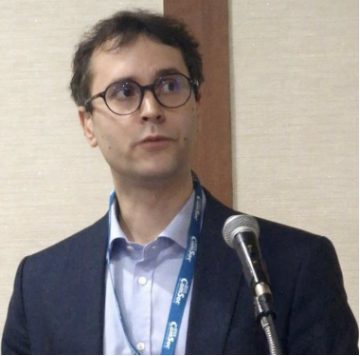
Bio: Filippo Poltronieri received a Ph.D. degree from the University of Ferrara, Italy, in 2021. He joined the interdepartmental Distributed System Research Group , led by Prof. Cesare Stefanelli in 2017. He is currently an Assistant Professor (RTD-A) at the Department of Engineering of the University of Ferrara, where he teaches in the “Operating and Computer Networks” and the ”Distributed Systems” course. Filippo Poltronieri’s research interests include Distributed Systems, Compute Continuum, Digital Twins, and tactical networks. He conducts his research activity with national and international scientists from many institutions. Co-authored publications were awarded with international recognitions, such as the 2020 NOMS Best Student Paper Award, the 2023 CNSM Best Paper Award, and the 2024 CNOM Best Paper Award. As part of his research career, he has been visiting the Florida Institute for Human & Machine Cognition (IHMC) in Pensacola, FL (USA) in 2016-2017 and 2018.
Tutorial #2: Understanding the True Potential of AI–Network Convergence in Beyond-5G and 6G Systems
Duration: 90 Minutes
Abstract: The rapid evolution toward intelligent and adaptive communication infrastructures demands a unified view of artificial intelligence (AI) across all network domains. While AI has been successfully applied to individual optimization tasks, its system-level integration—spanning radio access, transport, core networks, and their management systems—remains a major challenge for Beyond-5G and 6G networks. This tutorial addresses this gap by examining the true potential of AI–network convergence, where AI becomes a native element of the network architecture, continuously learning from, reasoning about, and orchestrating or even executing network behavior. To achieve this, the session introduces the concept of AI-native networks, in which distributed intelligence operates through closed loops across heterogeneous layers, either embedded or in the form of autonomous AI agents. It outlines mechanisms that enable data-driven control, semantic telemetry, and intent-based orchestration, forming the foundation of self-adaptive and context-aware systems. The focus is placed on end-to-end network coordination, demonstrating how AI agents can jointly interpret data from the RAN, transport, and core domains to enable holistic optimization and robustness under both foreseen and unforeseen situations for the control plane decisions or network management (deployment, customization, upgrades). Such adaptability cannot be achieved through conventional policy-based systems, which become unmanageable as complexity and dynamics increase. This tutorial presents the requirements, principles, and architectural framework for AI–network convergence, along with specific exemplary functionalities and a targeted survey of Beyond-5G and 6G AI-related developments. Furthermore, it showcases generic and applied AI enablers using the Fraunhofer FOKUS Open6GCore (www.open6core.org) and appropriately selected and embedded AI models, together with Fraunhofer FOKUS OpenLANES (www.openlanes.net), a large-scale network emulation system capable of simulating diverse network situations to generate and validate data for AI-based optimization. These demonstrations will help the participants gain an in-depth understanding of how AI can help improve optimization and resilience in future networks.

Marius Corici
(Fraunhofer FOKUS Institute, Germany)
Bio: Marius Corici (Dr. Eng.) is a senior researcher at the Fraunhofer FOKUS Institute. He has received his Diploma-Engineer degree at the ― Politehnica University of Bucharest on Nomadic Satellite-Based VoIP Infrastructure. He joined the Next Generation Network Infrastructures (NGNI) competence center of Fraunhofer FOKUS Institute, now renamed as Software-based Networks division. He has received his Doctoral Degree in 2013 on Self-Adaptable IP Control in Carrier Grade Mobile Operator Networks. Currently, he is the deputy head of the Software-based Networks business direction of Fraunhofer, leading the research and development teams for Open6GCore (www.open6gcore.org), Open5GCore (www.open5gcore.org) and OpenLANES (www.openlanes.net) toolkits and acting as a research pathfinder for the customization of 6G core networks. Marius Corici is also a researcher of the Technische Universität Berlin and preparing the lectures on 5G as part of the department next generation networks (Architekturen der Vermittlungsknoten – AV) (www.av.tu-berlin.de).

Thomas Magedanz
(TU Berlin, Germany)
Bio: Thomas Magedanz (Prof. Dr. Habil. Dr. Eng.) has been professor at the Technische Universität Berlin, Germany, leading the chair for next generation networks () since 2004. In addition, since 2003 he has been Director of the Business Unit Software-based Networks (NGNI) at the Fraunhofer Institute for Open Communication Systems FOKUS (www.fokus.fraunhofer.de/go/ngni) in Berlin. For 35 years Prof. Magedanz has been a globally recognized ICT expert, working in the convergence field of telecommunications, Internet and information technologies understanding both the technology domains and the international market demands. His interest is in software-based networks for different verticals, with a strong focus on public and non-public campus networks. His current interest is in the evolution from 5G to 6G. For more details look here: http://www.av.tu-berlin.de/menue/team/prof_dr_thomas_magedanz/.

Hauke Buhr
(Fraunhofer FOKUS Institute, Germany)
Bio: Hauke Buhr (Ms. Sc.) is a senior researcher at Fraunhofer FOKUS Institute, where he focuses on distributed computer systems, particularly in the domains of 5G/6G networks and NTN communication. After earning his Ms. Sc. from Hamburg University of Applied Sciences, he joined the NGNI competence centre, now the Software-based Networks division. He leads development and team coordination for Open6GCore (www.open6gcore.org) and acts as lead developer for OpenLANES (www.openlanes.net).
Tutorial #3: Building 6G-Ready FANET Digital Twins: the FALCON framework
Duration: 90 Minutes
Abstract: The evolution of 5G-and-beyond networks is leading to increasingly complex systems, requiring adaptive, flexible, and intelligent mechanisms for resource management and orchestration. An example of complex system is represented by Flying Ad Hoc Networks (FANETs), which act as “flying micro data centers” to bring connectivity, computation, and AI capabilities in environments where fixed infrastructures are inadequate or absent. Using FANETs equipped with computing and connectivity resources, it is possible to dynamically extend the edge of 5G/6G networks. The high mobility and deployability make FANETs particularly suitable for applications in hard-to-reach areas. Furthermore, by dynamically adapting the network topology (adding, removing, or repositioning UAVs), FANETs respond to fluctuating traffic and computing demands, which is a crucial aspect in some use cases. However, several challenges remain, including limited onboard energy, which constrains mission duration and may compromise network stability and Quality of Service. In this context, the Network Digital Twin (NDT) paradigm is emerging as a key enabler to model and predict the behavior of devices, communication links, and applications in a controlled and continuously updated virtual replica of the network. This tutorial will provide an introduction to the use of NDTs for the design and control of FANETs delivering edge computing services, with a specific focus on 6G scenarios. Starting from the fundamentals of NDTs and FANET architectures, we will show how a Digital-Twin–driven approach can be exploited to optimize managing of FANET, support real-time “what-if” scenario analysis, and improve QoS and QoE. A central part of the tutorial will be devoted to FALCON (Fanet-Aware Learning and digital twin CONtrol framework), a Digital-Twin–based orchestration platform that integrates multiple ML Smart Agents running concurrently on the twin. We will use FALCON as a running example to illustrate how different agents can be coordinated, and how model selection and model reuse can be implemented in practice.
Christian Grasso
(University of Catania, Spain)
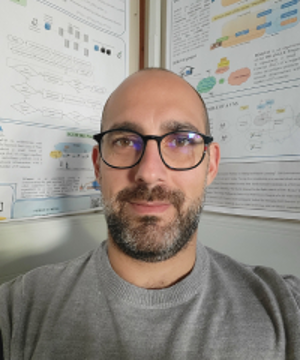
Bio: Christian Grasso is an Assistant Professor with the Department of Electrical, Electronic and Computer Engineering at the University of Catania. He received the Master’s degree (cum laude) in Telecommunications Engineering and the Ph.D. in Systems, Energy, Computer and Telecommunications Engineering at the University of Catania in 2017 and 2021 respectively. His research regards study and application of resource orchestration in 5G and beyond environments for creating and managing network slices using SDN, NFV, MEC and AI techniques in low and ultra-low latency demanding services, especially in the context of UAVs and FANET.

Giovanni Schembra
(University of Catania, Spain)
Bio: Giovanni Schembra is Full Professor at the Department of Electric, Electronic and Computer Engineering at the University of Catania. He received his degree in Electronics Engineering from the University of Catania, Italy, in 1991. In 1991-1992 he was with the Telecommunications Research Group of the Cefriel of Milan, working on traffic modelling and performance evaluation in broadband networks. He is Associate Editor of the IEEE Transactions on Network and Service Management, and has been co-lead Guest Editor of the IEEE TNSM SI series on Management of Softwarized Networks. Since 2017 he is in the Organized Committee of the IEEE Netsoft conference. He was involved in several projects, recently on projects regarding the application of AI at the edge of a 5G network, and the use of UAVs and Flying Adhoc NETworks (FANET) for far-edge and extreme-edge computing and for video surveillance applications in rural and smart city scenarios. He has organized many workshops regarding network softwarization and network intelligence.
Tutorial #4: Multi-Armed Bandit Algorithms in Next-Generation Wireless Networks: A Lightweight, Stateless Alternative to vanilla Reinforcement Learning
Duration: 90 Minutes
Abstract: Effective management of wireless communication networks involves addressing sequential decision-making problems such as task offloading, routing, and resource allocation. Although stateful Reinforcement Learning (RL) and Deep Reinforcement Learning (DRL) have been widely proposed as solutions, these approaches often face high computational demands and slow convergence, making online training in real-world settings particularly challenging. In this context, Multi-Armed Bandit (MAB) algorithms offer a lightweight, faster-converging alternative. This tutorial explores the potential of MAB algorithms for optimizing next-generation wireless networks. In particular, the tutorial will showcase a variety of heterogeneous network scenarios where MAB algorithms can outperform their stateful RL- and DRL-based counterparts, addressing two key questions:
i) In which scenarios does MAB achieve better performance?
ii) Why does this occur?
Participants will gain both theoretical and practical insights for applying MAB to optimize wireless networks in dynamic environments.
Raoul Raftopoulos
(University of Catania, Italy)
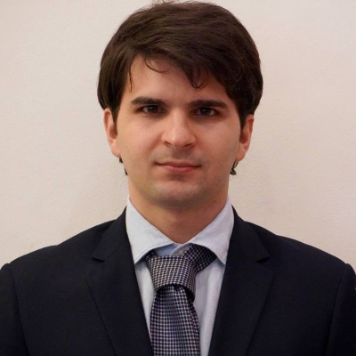
Bio: Raoul Raftopoulos received his Ph.D. in Systems, Energy, Computer and Telecommunications Engineering at the University of Catania, Italy, in 2023, where he is currently a Non-Tenured Assistant Professor. In 2023, he was a Ph.D. Visiting Student at the Institute for the Wireless Internet of Things, Northeastern University, Boston, MA, USA. His research focuses on the application of Machine Learning techniques to O-RAN, management and orchestration of 5G networks, microservices, and network slicing. In 2022, he received the Francesco Carassa Award for best presentation and publication. He has been involved in several H2020 European Projects such as Triangle, 5GINFIRE, and Flame as a research consultant and software developer. He is on the Technical Program Committee of several international conferences, including ICIN, CCNC, NetSoft, and NFV-SDN

Fabio Busacca
(University of Catania, Italy)
Bio: Fabio Busacca is an Assistant Professor at the University of Catania, Italy. His research revolves around the optimization of the network edge, with a focus on joint resource allocation and computation offloading in vehicular networks and UAV/UGV networks. His other interests include LPWAN protocols for IoT—particularly LoRa—Artificial Intelligence and Game Theory applied to next-generation communication networks, and Underwater Acoustic Communications. He is one of the founders of the AIoT workshop on the integration between AI and IoT, and he serves on the Technical Program Committee of multiple international conferences, including Mobihoc, MedComNet, and DCOSS-IoT.
Tutorial #5: Resource Orchestration in 3D Networks under Stochastic Dynamics
Duration: 90 Minutes
Abstract: Upcoming 6G systems aim to unify space, aerial, and ground network segments by integrating satellite and airborne nodes into the Radio Access Network (RAN). The 3D network continuum will be further supported by a powerful computing fabric to intertwine communication and computation. This architecture enables en-route processing of tasks offloaded by ground, aerial, and spaceborne devices, creating a dynamic resource-orchestration environment shaped by mobility, time-varying channels, stochastic task arrivals, and time-correlated factors such as device energy levels. Collectively, these developments are poised to reshape the design, deployment, and management of next-generation networked computing infrastructures. In this tutorial, we aim to introduce the audience to a holistic framework for efficient and resilient radio and computing resource orchestration in 3D networks under stochastic system dynamics. The scope of the tutorial is, first, to present realistic models of probabilistic and time-dependent uncertainties in 3D networks. Then, distributed resource orchestration algorithms based on Game Theory and Regret Learning will be discussed, which rely on limited information exchange to address system dynamics. Finally, the operational points (solutions) of the proposed algorithms will be examined, ensuring efficiency and resilience in dynamic 3D networks. Applications of the proposed holistic framework will be presented, including computation task offloading from ground devices, such as remote sensor networks, and collaborative computing scenarios like Earth observation, illustrating the practical scope of the tutorial.

Maria Diamanti
(National Technical University of Athens, Greece)
Bio: Maria Diamanti is a Postdoctoral Researcher in the School of Electrical and Computer Engineering at the National Technical University of Athens. She received her Diploma in Electrical and Computer Engineering from the Aristotle University of Thessaloniki in 2018 and her Ph.D. from the National Technical University of Athens in 2023. She has been awarded the M. Stassinopoulos – VIOHALCO Foundation Best Ph.D. Thesis Award for 2023. She has been involved in several national and European RTD projects in the area of 5G/6G systems and is currently the PI of the project titled CELESTE ”Taming System UnCErtainties via Efficient and ResiLiEnt Resource OrcheSTration in 3D NEtworks”, granted funding by the Hellenic Foundation for Research and Innovation (H.F.R.I.) under the “4th Call for H.F.R.I. Research Projects to support Postdoctoral Researchers”. Her research interests lie in the areas of 5G/6G wireless networks, resource management and optimization, game theory, contract theory, prospect theory, and reinforcement learning.

Symeon Papavassiliou
(National Technical University of Athens, Greece)
Bio: Symeon Papavassiliou is currently a Professor in the School of ECE at National Technical University of Athens. From 1995 to 1999, he was a senior technical staff member at AT&T Laboratories, New Jersey. In August 1999 he joined the ECE Department at the New Jersey Institute of Technology, USA, where he was an Associate Professor until 2004. He has an established record of publications in his field of expertise, with more than 450 technical journal and conference published papers. His main research interests lie in the area of computer communication networks, with emphasis on the analysis, optimization, and performance evaluation of mobile and distributed systems, wireless networks, and complex systems. He received the Best Paper Award in IEEE INFOCOM 94, the AT&T Division Recognition and Achievement Award in 1997, the US National Science Foundation Career Award in 2003, the Best Paper Award in IEEE WCNC 2012, the Excellence in Research Grant in Greece in 2012, the Best Paper Awards in ADHOCNETS 2015, ICT 2016, IEEE/IFIP WMNC 2019, IEEE Globecom 2022, as well as the 2019 IEEE ComSoc Technical Committee on Communications Systems Integration and Modeling best paper award (for his INFOCOM 2019 paper). He also served on the board of the Greek National Regulatory Authority on Telecommunications and Posts from 2006 to 2009.